Robotic Knee Replacement: How It Works and Its Benefits
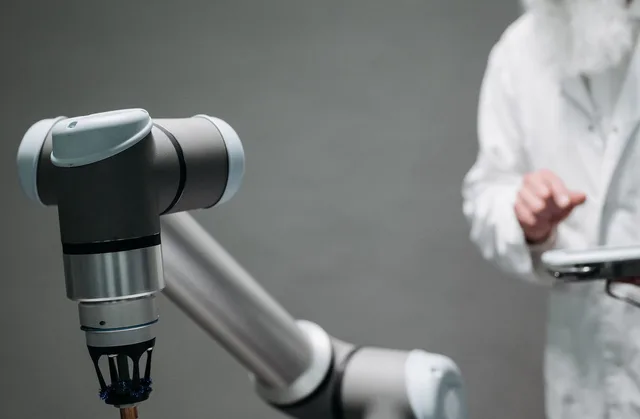
Robotic-assisted knee replacement is a refinement of conventional surgery. The surgeon remains in control throughout, while the technology helps plan and carry out the operation with greater precision.
How It Works
- Planning: Scans or in-theatre mapping build a 3D model of your knee.
- Personalised plan: The surgeon decides implant size, position and alignment for your anatomy.
- Guided bone preparation: The robotic arm helps keep bone cuts within the planned limits.
- Balancing: Ligament tension is checked in real time before the final implant is fixed.
Potential Benefits
- More accurate and reproducible implant alignment
- Better preservation of healthy bone and soft tissue
- Careful ligament balancing for a stable, natural-feeling knee
- Less post-operative discomfort for many patients
Is It Right for Everyone?
Robotic assistance can be used for both total and partial knee replacement. Your surgeon will explain whether it suits your knee and what outcomes to realistically expect. Good rehabilitation matters just as much as the technology.
Expert Tip
"The robot is a tool. Surgical experience and sound judgement still decide the quality of the result." — Dr. Gaurav Saini
To learn more, see our page on robotic joint replacement or book a consultation to discuss your options.
Medical References & Evidence

Written & Reviewed by: Dr. Gaurav Saini
MBBS, MS (Ortho), DNB (Ortho), MNAMS | Fellowship in Joint Replacement
Dr. Gaurav Saini is a leading Senior Consultant Orthopaedic & Robotic Joint Replacement Surgeon with nearly 20 years of expertise and over 5,000 successful surgeries. He practices at Max Super Speciality Hospital, Mohali, specializing in advanced CORI robotic-assisted knee and hip replacement surgery, sports arthroscopy, and complex trauma care.